
Rick73
-
Posts
1,181 -
Joined
-
Last visited
-
Days Won
4
Rick73's Achievements
384
Reputation
-
Tesla to Lay Off More Than 10% of Workforce, Report Says
Rick73 replied to ice-capades's topic in E.V. Central
It is hilarious that you and a couple of others have convinced yourselves that when others don’t agree with you it must be because they don’t understand your point, rather than they simply think your ideas, information or conclusions are just wrong. You’re not so brilliant I can’t understand what you write; I often just disagree with your point of view because I think you’re wrong. Every single time I think you have changed and become more professional based on latest posts, and I risk communicating directly with you by responding, I end up regretting it. You can not help yourself from adding offensive, insulting and unnecessary language with sole purpose of being disrespectful. And it’s not just with me, you do it to others as well. Why in the world you would do that is the only thing that goes over my head. It makes no sense, especially since you are a moderator and should behave at a higher level. -
Tesla to Lay Off More Than 10% of Workforce, Report Says
Rick73 replied to ice-capades's topic in E.V. Central
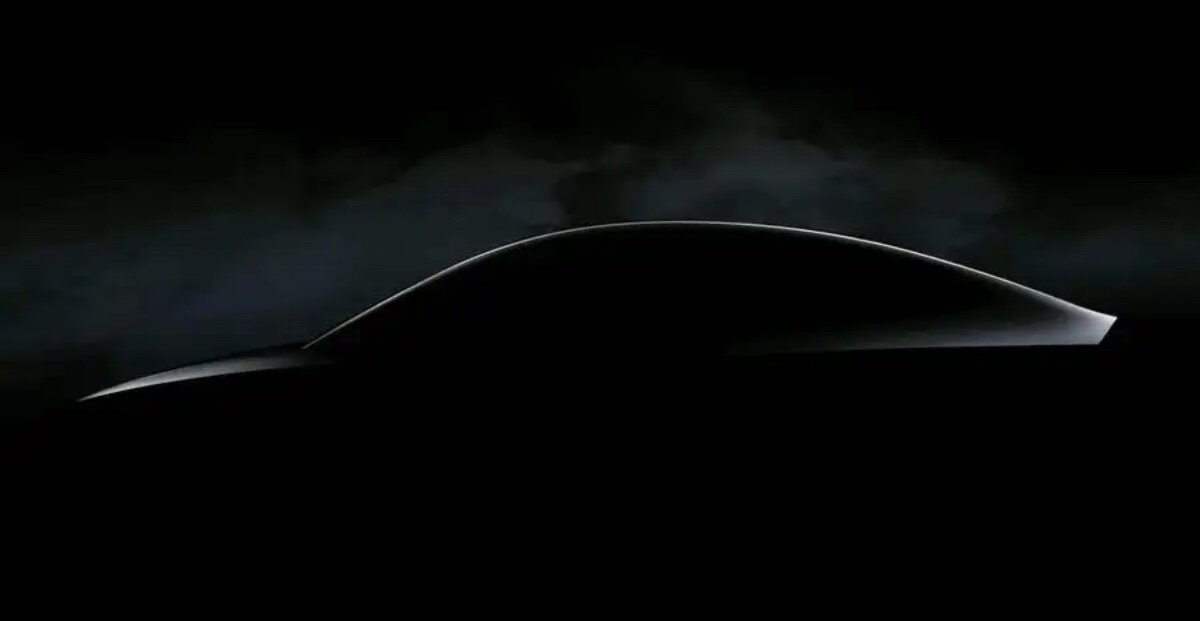
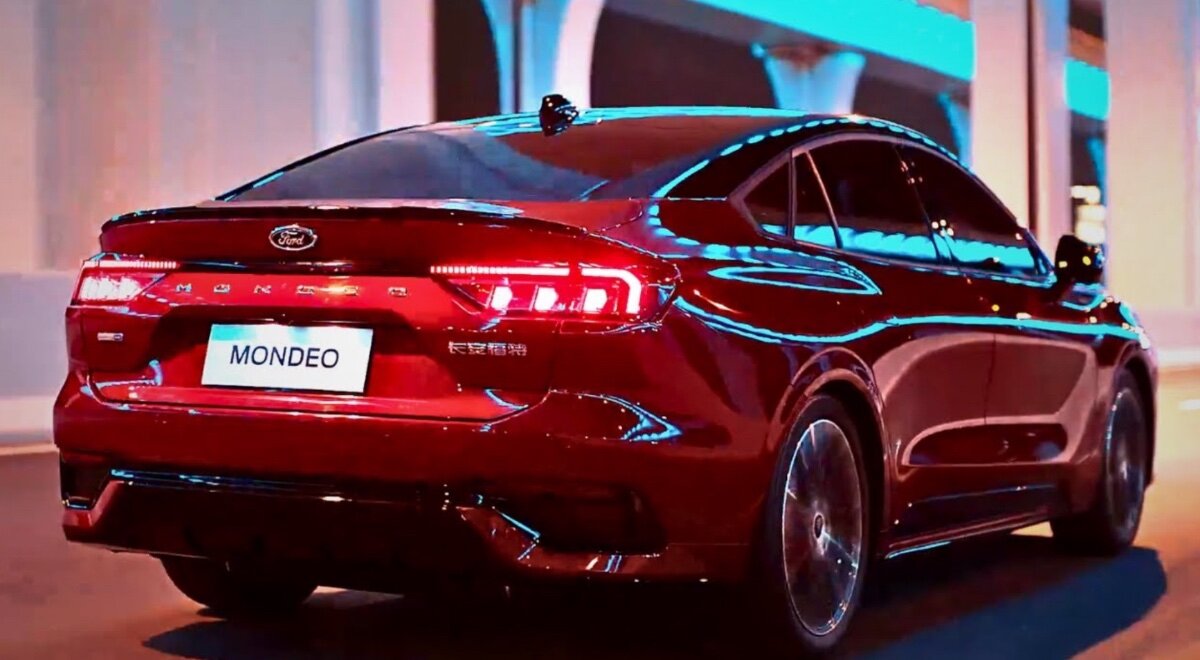
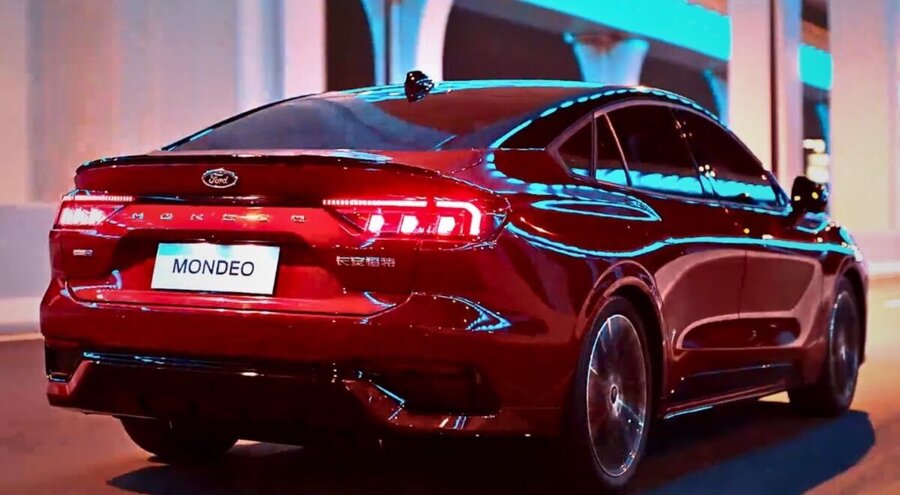
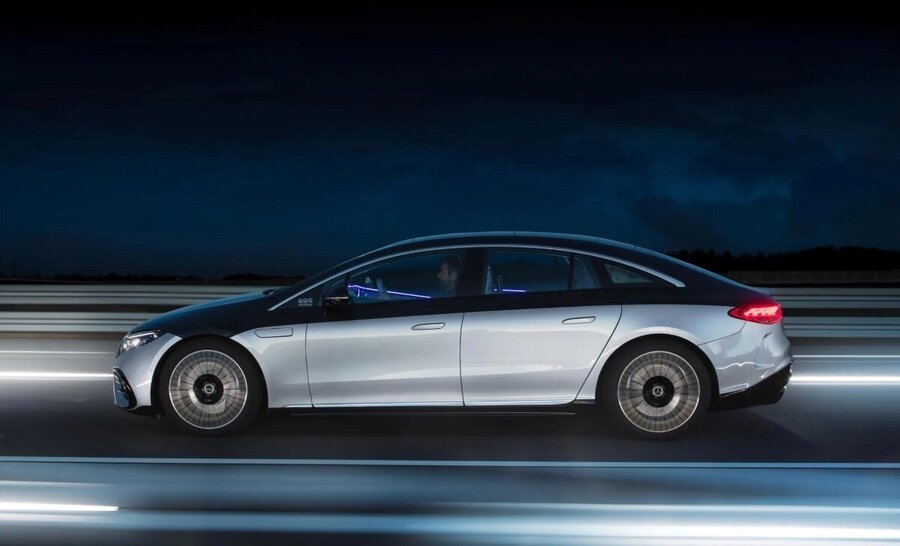
The silhouette Tesla teased of the Model 2 is not all that different from what has become the modern fastback sedan shape. To me the back end of many modern sedans look very similar, whether it’s a Ford Mondeo, Chevy Malibu, Honda Accord, Toyota Camry, Nissans, Kia, etc. I personally don’t see the fastback sedan look as “ugly” but accept aesthetics is extremely subjective. For example, I always preferred the fastback versions of Mustangs going back to my first car, a 1965 bright red Mustang. A fastback roofline “today” contributes significantly to lower drag, which enables higher highway MPG in ICE and hybrid vehicles, and added range in BEV. The electric Mercedes EQS pictured below claims to be most aerodynamic production car, beating out Tesla S and Lucid Air. Obviously for a city car like Fiat 500e aerodynamics isn’t as important due to lower driving speeds and limited required range, but for versatile vehicles capable of longer trips, real-world highway range is still very important. Just yesterday my son told me that if he doesn’t do close to 75 MPH in his Tesla on way to work he could get run over; and that’s inside city limits. Given the distance he commutes to work, added range at high speeds comes in very handy.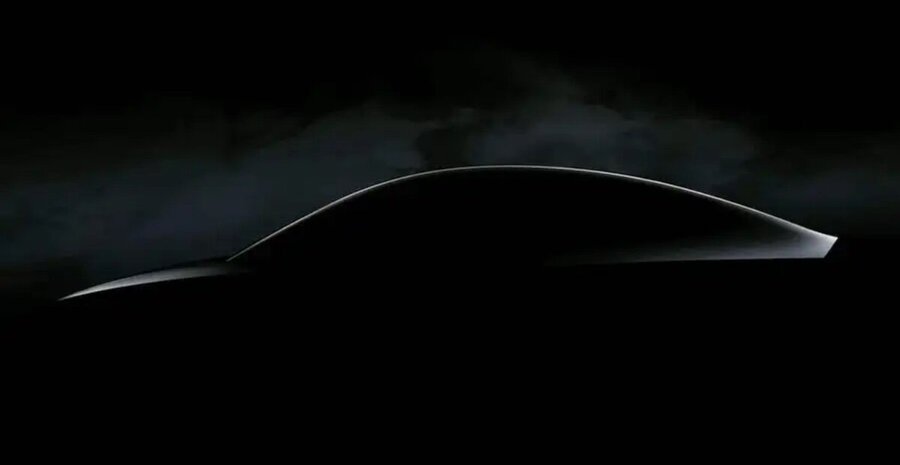
-
Tesla to Lay Off More Than 10% of Workforce, Report Says
Rick73 replied to ice-capades's topic in E.V. Central
Electrification may lead to a different automotive reality when it comes to frequent redesigns because basic shape affects function far more than with ICE or hybrid vehicles. If designers deviate too far from optimized shape, vehicle driving range may be reduced too much due to added highway aero drag. I agree a Tesla Model 2 (if it happens) will likely be very similar to Models 3 and Y. I expect or would like to see a scaled down version of Model Y hatchback roughly size of Civic/Corolla; which to me is not necessarily a bad thing. I know it’s not a direct comparison, but think how similar commercial airplanes can look even when size is vastly different. Obviously they are not sold retail, but appearance still matters and general shape are similar from a small Embraer 170 to Boeing 737, Dreamliner, or 777. What works best works across wide range of sizes. I don’t expect automobiles will follow same trend of looking almost the same, but similarities within a brand seems unavoidable. -
Tesla to Lay Off More Than 10% of Workforce, Report Says
Rick73 replied to ice-capades's topic in E.V. Central
Agree a redesign is due, but have no idea of when that might happen. I don’t follow expensive BEVs closely because they don’t make as much sense to me, but recently read that Models 3 and Y account for 96% of Tesla auto sales (not sure if that percent was US, Europe, or worldwide), so I would guess Tesla will not prioritize an S or X redesign. Perhaps it will make most sense when new technology supports a major update. I’ve seen speculation that new batteries like 4680 or faster-charging battery design may be catalyst for a redesign. It seems to me that they presently have bigger issues to solve, though I understand the Model S is their flagship and needs a new and bigger image. -
Tesla to Lay Off More Than 10% of Workforce, Report Says
Rick73 replied to ice-capades's topic in E.V. Central
Interesting that Steve Westley, former Tesla board member, in linked video mentions Model 2 as if still in play, contradicting Reuters April 5th report that it had been cancelled. I thought I heard him also say Cybertruck had been a flop, but not sure I heard correctly. From what I’ve read, most analysts agree Tesla needs an affordable Model 2 far more than Robotaxi. Cybertruck was a huge mistake in my opinion, given those efforts and capital investment could have been applied towards a mass-market vehicle for value-conscious buyers. -
Greater cause for concern: Reuters reports Tesla to lay off more than 10% of staff globally as sales fall. Stock is down 31% this year, and many analysts have questioned whether cancelling affordable Model 2 was a good decision given it would support future growth. Of course, that assumes Model 2 has indeed been cancelled, and also that if true, that Tesla had a choice about it.
-
Bringing up 800-Volt charging is a red herring IMO. While true that 800-Volts can deliver higher power, there are plenty of EVs charging at 400-Volts that are much faster in MPH, including most Tesla (Cybertruck may be 800-Volts, not sure, but other models 400-Volts). Even the lowest cost standard-range LFP Model 3 can charge at +/- 500 MPH (real world — seen it myself). I don’t disagree 800-Volts is the likely future, but that’s a different issue. Like I said, Mach-E is not bad, it’s just not great either by comparison to the best, including those vehicles limited to 400-Volt. Obviously there are vehicles that charged much slower like Chevy Bolt. I don’t want to argue, just remain objective.
-
Extra 20 miles of range is definitely nice improvement, though mentioned charging rate of 10-80% in 36.2 minutes seems slow and not all that competitive compared to some of the latest BEVs. Even with extra 20 miles of range and 20% faster charging, it works out to about 370 MPH. That’s not entirely slow but some competition is doing twice that or even faster. Next generation and faster-charging batteries should reduce charging time considerably.
-
Don’t get me wrong, I agree with your point of view, but when I stated “many” buyers can overlook Fiat 500e’s small size I didn’t mean the majority or vast numbers. By many I meant enough that perhaps the Fiat 500e could be successful for what it is, a niche vehicle, provided driving range wasn’t so limited given the car’s cost. I don’t like the Fiat’s cute factor (to me looks like something very young people would drive, especially females), but its small size doesn’t intimidate me at all. It’s actually larger than before, so no longer all that small except for being very short. I would love the extra free space it would leave parked inside my home’s garage. As I’ve stated in other threads, I think a compact affordable electric car should not be much smaller than a Honda Civic or Toyota Corolla, provided goal is mass acceptance and adoption. And even Civic/Corolla size will limit many buyers who prefer large SUVs.
-
In above examples, why not include CO2 from all-electric driving during first 30 miles? The first 30 miles are zero “tailpipe” but not zero overall. The table on previous page included data. Obviously 160 MPG is too high since it exceeds all-electric rating. 😂 Just kidding — not trying to nitpick. I also understand your point and it’s time to move on since much of this doesn’t solve biggest problems anyway.
-
In my opinion many buyers can overlook 500e small size, some actually preferring it, but the limited city-car-like driving range, given the 500e relatively high starting price, will be a deal breaker for far too many prospective US buyers. A small car is where Tesla energy-efficiency expertise is needed most in order to make an affordable vehicle more practical for daily use. Fiat’s website shows 500e having 162-mile city range, and 149-miles combined. From that we can estimate a highway range around 133 miles, and that’s with a lot of slow driving included in EPA Highway test cycle. At actual steady freeway speeds I expect much less than 133 miles of range, which means I could not even drive from my house to airport that I fly out of most often and still have enough charge to get back home. Most buyers won’t consider a car costing +/- $35k that they can’t drive 50 miles out and 50 miles back without worrying about having to charge. Given its small size and 3,000-pound weight, the Fiat 500e needs to be much more energy efficient in order to provide greater highway driving range. It’s another example of why aerodynamics is so important to BEVs. The 500e is not a brick, but not great either.
-
Fiat 500e might turn out to be a good example that being a smaller BEV is not enough unless price and performance are also appealing to buyers. I’m curious to see how the new Fiat does. It’s definitely much smaller and lighter than a Tesla 3, but starting price is only about $5k lower; MSRP around $34k. With only about 37 kWh of estimated useable battery capacity, city driving range is in order of +/- 150 miles, limiting the 500e to being mostly a City Car. Some buyers may consider the Fiat 500e “cute” or visually more appealing than a Tesla 3, but giving up +/- 100 miles of range, plus quite a bit of acceleration and real-world highway cruising speed just to save $5k seems a lot to ask of buyers. I hope Tesla haven’t cancelled the Model 2 because US needs a compact BEV under $30k, and with a range of about 250 miles. I may be completely wrong, but just can’t see a BEV the size of Fiat 500e appealing to the masses, particularly at $34,000. I’m also curious to see what kind of vehicle Ford come up with for the small low-cost segment.
-
"I would just stay tuned. Just don't always believe what you read." - Franz von Holzhausen, Tesla Chief Designer Agree it’s hard to know what to believe. Ambiguous remarks can be walked back in a heartbeat. To your point, I think whether it’s good for Ford or not depends on why Tesla is cancelling Model 2 (assuming report is correct to start with). If Tesla is cancelling Model 2 because they suddenly realized they can’t build it for anything near $25k, or that what they can build for $25k is so undesirable few would buy it, or that profitability is so low that cannibalized Model 3 and Y sales would do more harm than good, then I’m not sure Ford can do much better. On the other hand if Tesla is temporarily canceling Model 2 because they don’t have the funds to support the investment (due to weak 1st quarter sales) or because their resources are stretched too much with Cybertruck issues and or getting Robotaxi going ahead of Model 2, then it could be a great opportunity for Ford and others to get ahead on smallest of BEVs. I personally think Tesla made a huge mistake by designing Cybertruck instead of Model 2 years ago, though at that time Models 3 and Y were selling faster than they could build them, so need for smaller and cheaper car wasn’t as obvious back then.
-
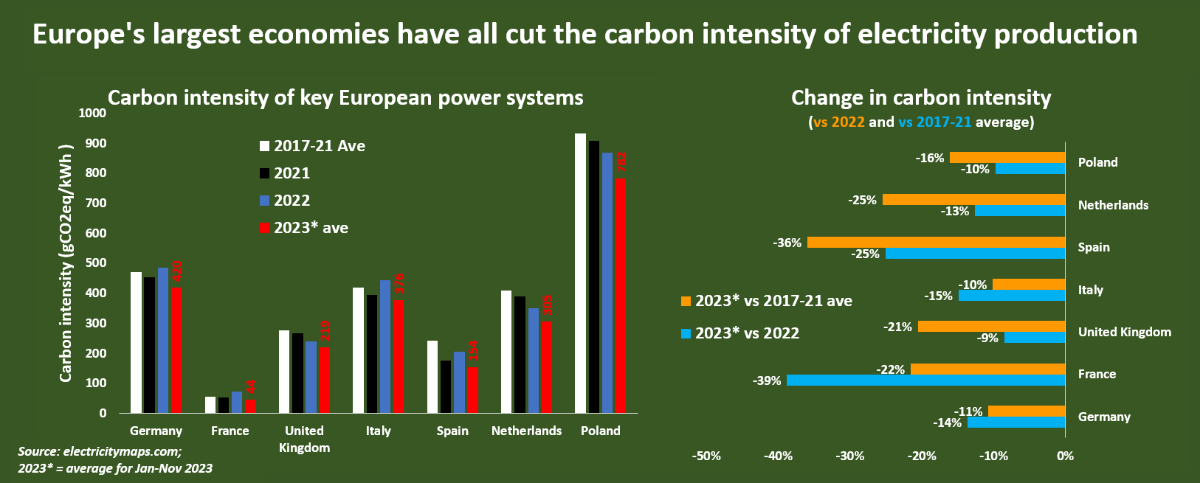
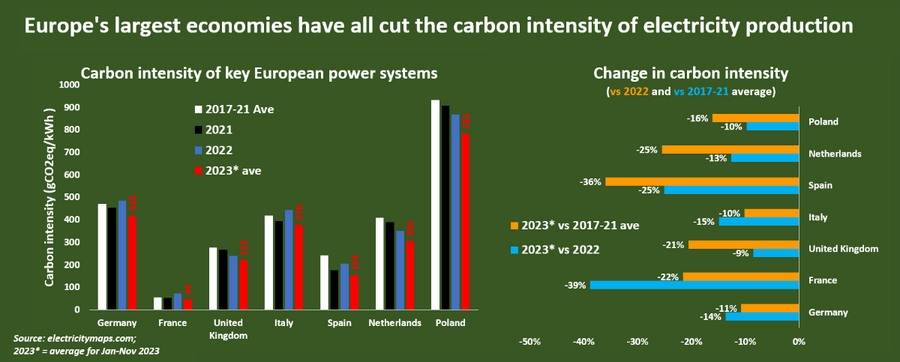
Petrol hybrid getting 134 MPG equivalent, or 4 miles per kWh on electricity may be overstated, making discussion somewhat interesting, but at end of day, making source of electricity greener seems most important. Differences between countries, for example, really highlight that going electric in France is almost 10 times lower CO2 than Germany (only considering charging, not vehicle manufacturing), and even less when compared to Poland. France has been heavily dependent on nuclear and it is reflected in much lower CO2 per kWh.
-
A great way to discourage that kind of behavior is to enforce laws. It was reported last night that Dallas PD issued arrest warrants for Rashee Rice and Knox associated with their street racing and subsequent crashes. Assuming they are found guilty, much will depend on punishment. Too little and it will just encourage more of the same.