.
Ford's proclivity to make minimal investments in cars is because they aren't very profitable to begin with. Some were absolutely losing money. We've already discussed ad nauseum the reasons why - too many redundant platforms and too many changes. Ford created 9 different ecoboost engines plus multiple versions of some while Toyota soldiered on with NA2.5s and 3.5s and a turbo 2.0. And their car platforms haven't change much in decades. That's how you keep costs down. So of course that is self inflicted. We keep saying that over and over but you guys don't hear it. But that's water under the bridge at this point - the question is how should Ford respond?
Do they spend tons of money fixing fusion and focus and escape to realize a 3% return or do they spend far less money and replace them with products that have higher margins? Ford has that option. Others don't have those types of vehicles or good options to make them.
And there is a huge difference between 3% and 10% margins. Let's talk $30k vehicles at 3% and $40k vehicles at 10%. It takes 550,000 units to make half a billion dollars on the cheaper one. And that requires 2 huge factories with 3 shifts each. And with only a $900 margin per vehicle if you get in a price war and have to put an extra $1k rebate on the hood you're losing money. No margin for error.
Meanwhile the $40k vehicle makes $4k profit per unit so it only takes 125K units to make half a billion profit. That's one factory and 1 or 2 shifts - less than half the fixed overhead. And you can survive price wars or recessions and still turn a profit.
It's also a zero sum game unless you have tons of extra cash (Ford doesn't) or you're willing to go into more debt to expand vehicle capacity by hiring tons more designers, engineers, testers, marketers and building expensive new factories. Especially if all you're getting is a 3% ROI. Therefore you have to kill existing projects to fund new stuff.
What you thought when Ford was selling hundreds of thousands of small cars was that they must be raking in the cash. But when Mulally took over Ford admitted they were losing $3K on each focus they sold. So why were they (and GM) selling them of they lost money? Because of the CAFE offset that allowed them to sell larger more profitable ones. And back then if you closed a factory you still had to pay the workers. Now the rules are different so the incentives to make small cars at a loss or small profit just isn't there.
To put it another way - corporations are investments. Why would they invest billions to make cars for a 3% return when Ford could put that money in bonds and get a guaranteed 5% or higher return?
And I beg to differ on F series resources. They do visual refreshes every 3 years and major changes every 6 years. Also consider there are 2 cabs and chassis, 12 cab/bed combinations and 6 different engine/transmissions plus dozens of options and packages. That's a full time job for a huge team of people and part time for others. And at an average price of $60k at 15% net profit (which are both probably on the low side) that's a net profit of $9k per vehicle or close to $9B. From one line of vehicles in 3 plants. That's why it gets all the resources.
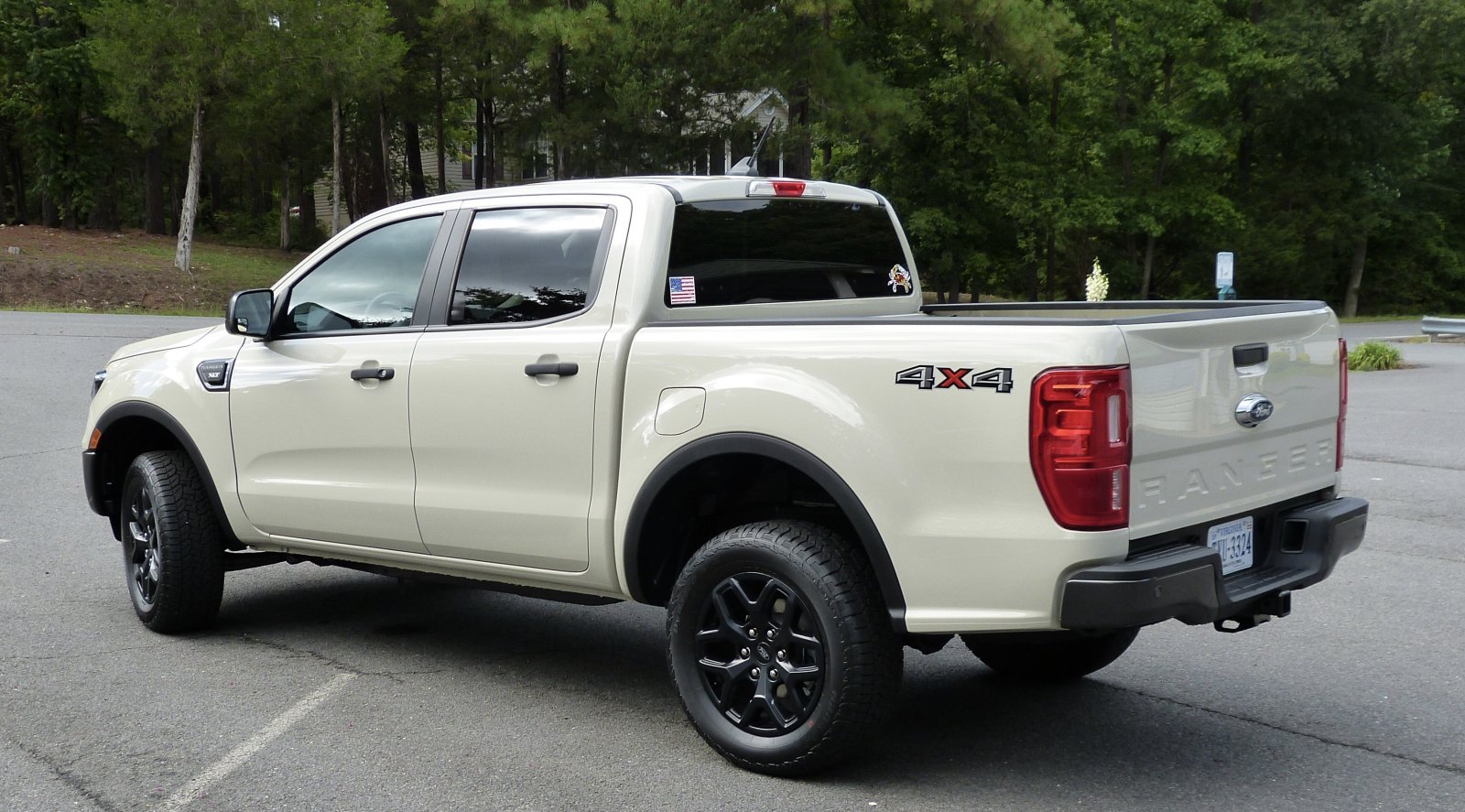
I can see a Bronco pickup using interior pieces (dash, seats, center console, rear seats, door panels) and most of the exterior panels but with a different nose....call it Bronco Ranger edition, F100 (far fetched) or just continue with the Ranger name on the newly styled truck and move forward. Right now, the interiors are completely different as is all the exterior panels. I know it shares chassis and suspensions....but more sharing equals savings in scale..... common doors, panels, hoods etc, etc, etc....
Yes. I had a 2013 Titanium and it was great but all I ever saw on the road were cheap SEs. They thought they could sell premium models with AWD and plug in hybrids and 350 hp but buyers said no we want cheap cars.
I can see that.
One of the reasons some are moving away from 12VDC is the increased loads and charging strategies OEMs are placing on these batteries.
Can you believe someone argued with me when I told them that OEMs programmed the non-hybrid vehicles to prioritize charging the 12V when the vehicle was decelerating? There are multiple data points used to determine charging and discharging strategies.
Meanwhile, OEMs are still using 150-year-old Lead-Acid Batteries instead of more modern batteries.
That's assuming a Bronco Pickup would sell as well, which I'm not sure it would. They are two different approaches for two different customer perceptions, mechanical innards notwithstanding.
Maverick would also benefit profit wise from shared styling with Bronco Sport, but each serve different market segments.
I think this post lays the situation out very nicely. We have a lot of Ford apologists on this site and I used to be more sympathetic to their issues, but trying to justify the current state of affairs is simply ridiculous. And to be clear, I want Ford to succeed.
There is a lot of talk about profitability, what is enough, does it justify maintaining a product, etc., but profit is profit whether it is 3% or 10%. A three percenter can make more money if it substantially outsells a 10 percenter, so to me this isn’t a sufficient justification to dump products. It is well documented on this site why Ford’s sales number decline on various models. It is self inflicted.
Then theres talk of lack of sufficient development resources to maintain a full line of vehicles. Let’s face it, the F series does not change so substantially from generation to generation that they consume all of the resources. As an owner and enthusiast, I know they don’t. You can call something all new but it doesn’t mean every part number is new. Each product category should have been able to support itself and if you need more people you hire them because your product should be able to sustain itself.
The bottom line for me is it is a management issue. Perhaps the Ford family is partly responsible for the situation due to their overall control of the company, but it isn’t clear to me they won’t listen to the CEO. Mulally appears to me to be the last CEO that knew what the hell he was doing, and it did appear the Ford family listened to him at the time. I highly doubt Farley has no influence, because the direction of the company seems to be consistent with his beliefs.
If Toyota can be a full line global manufacturer and be profitable, there is no excuse why Ford could not do the same, especially when they were one. In my observations over the years, when companies shrink, they tend to eventually disappear or get bought out.
In one of the other threads, somebody mentioned Henry Ford would be rolling over in his grave, and I agree. I don’t think Henry Ford wanted his company to be a boutique manufacturer, limited in scope. It seemed he wanted to bring vehicles to everyone.
I’ve noticed that the batteries in the 2.7–3.0L V6 Fusion, Edge, Nautilus, and MKZ don’t last very long—probably due to the heat in the engine bay. I end up replacing mine in my MKZ about every two years, thankfully under warranty, and the dealership handles the hassle. A friend of mine has a '16 Edge Sport with the 2.7L V6 and experiences the same issue. Meanwhile, she also owns an Edge and a Fusion with the 2.0L I-4, and neither of those has needed a battery replacement yet.