-
Files
-
Popular Contributors
-
Posts
-
 Addressing both Borg and these comments, it's crazy to me that Ford can justify local production and more consistent and thorough updates for products like Corsair in China when it only sells 400 a month, while leaving the product out to dry in its home market for 2,500+ sales per month. I hope his comments on Corsair from China not happening prove to be incorrect. To remove 1/4 of the lineup just as the brand is getting some traction would be idiotic. It's sad that Lincoln has been treated as the red-headed step child for so long.
 -
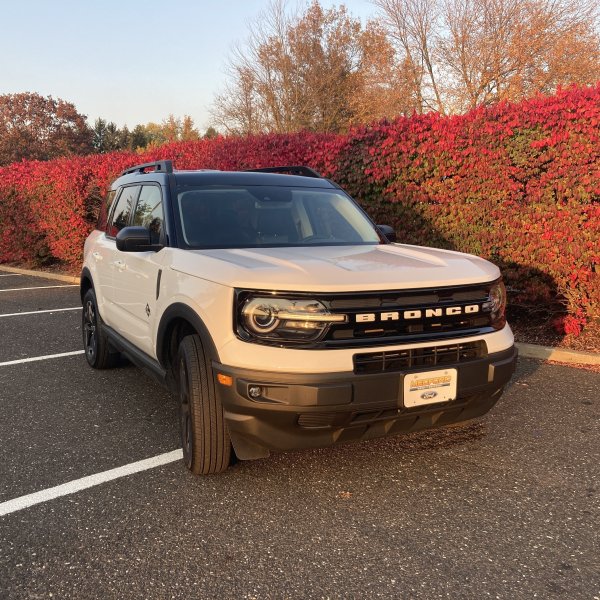
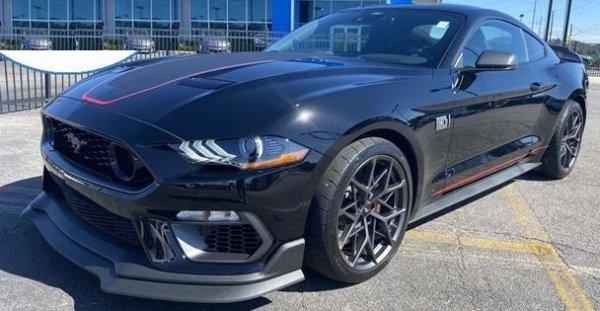
Some of the latest Borg comments.... Talk about a nothing statement, again. But it does seem to confirm they‘ve already bailed on the Chinese Corsair import. Which I expected tbh. So Corsair is almost certainly dead, but they are talking about an EV based on Skunkworks to arrive by 2030. Which…you know…is far away. Lincoln is likely going to be run on mothballs in the US for the foreseeable future until they can get a grip on their next move and Ford delivers electrified platforms. There is a rumor of a Bronco-based model in the works, but it’s tentative…and I can’t help but notice Bronco’s Premium model is back on the menu after being shelved for a couple years. That would certainly be more exciting, but it’s probalby too expensive to develop and Ford likely doesn’t want Lincoln running interference. I’m waiting to see what happens to Nautilus and if they finally pull the plug this year. The future of Lincoln is pretty tennuous, this might be the moment to scuttle it. But it’s ultimately cheaper to let diminish on low funding. Navigator is probalby the only reason to retain Lincoln right now. Lincoln has just run out of options to continue business in the US. --- I just don’t see a pathway for a Mustang at Lincoln, especially when Mustang is already a $350K exotics now so there is nothing holding them back. Lincoln would need a dramatically new image to sell anything like a small performance car. And it’s very unlikely to sell well at all no matter how hard they try. Caddy worked decades to cultivate a well earned performance image and they‘ve had no sales success with it. I do think Lincoln could use more performance oriented SUVs or off-roaders. That seems like a natural direction for them to go with the limited Ford assets they have to work with. I don’t really know what Ford’s electrified future looks like at this point, but it’s extremely delayed and Lincoln has to wait for it. I don’t know how many near-death experiences Lincoln can endure, but Farley has taken no interest in the brand and has distanced himself in the organization. I hate to be hyperbolic since it’s a common thing when discussing Lincoln, but they have to be on the verge of dumping it right now. They have no product pipeline and Ford has made it impossible for them to operate in the US beyond Aviator and Navigator. --- Lincoln is facing the reality that it has very few assets to work with and a disinterested CEO who won't give them the budget for anything significant. I don't blame Ford because they are facing huge shortfalls from debt write offs, high taxes, regulatory uncertainty and a weak consumer index heading into 2026 and 2027. Now is not a good time to spend money on anything but certainty and risk mitigation. I don't think Lincoln should be shuttered because there are some opportunities coming up that might work for them. Focusing on Navigator, Aviator, Bronco, and small EV, all with a premium SUV off-roading image might work out for them and generate some new excitement. Navigator and Aviator were sketched in for EREVs at some point which would be compelling I think. Again that's all based on if Ford delivers on those assets. So Lincoln will just have to wait on those things before they can transform their lineup. But that's best case scenario and I've never seen best car scenario ever happen at Lincoln. But 2025 was a devastating year for Ford's budget and product planning so it's likely Ford is pulling back on many low priority investments and extending the life of others. Lincoln's position has never been more precarious. I'm pretty pessimistic about their outlook, they have so much working against them. It's going to be a LONG drought, at least 4 years.
-
 Trump administration pushes out official whose unit banned Chinese vehicles, sources say | Reuters
 -
I'd imagine at some point sooner than later we'll start seeing something in the way of spy shots.
-
 When the Pinto was being developed, the federal standards for fuel-tank safety were in flux. The initial standard called for vehicles to pass a 20 mph, moving-barrier crash. Ford moved ahead under the assumption that this would be the standard. The federal government twice considered a stricter standard for the final regulation. The first change involved making the standard a crash into a FIXED barrier at 20 mph. The second proposed change involved raising the crash speed to 30 mph, while retaining the fixed barrier. The government settled on the 20 mph moving-barrier crash standard, and the Pinto met that standard. I doubt that other small cars of that era would have fared much better in high-speed crashes of the sort in the Grimshaw and Ulrich cases, and no doubt, in those cars, other engineering issues would have come into play that resulted in a fire. At the end of the day, the Pinto met all applicable fuel-tank safety standards, and its overall safety record was better than average for comparable small cars of that era. When it came to fire-related deaths (which, again, would have included deaths from ALL fires - including those that started under the hood), it was slightly worse than average. By some data sets, it was not THE worst (that was the AMC Gremlin). From what I have read, the plastic shield really didn't do anything to increase safety. But it gave the appearance of the federal government having pressured Ford into "doing something," which is what mattered.
 -
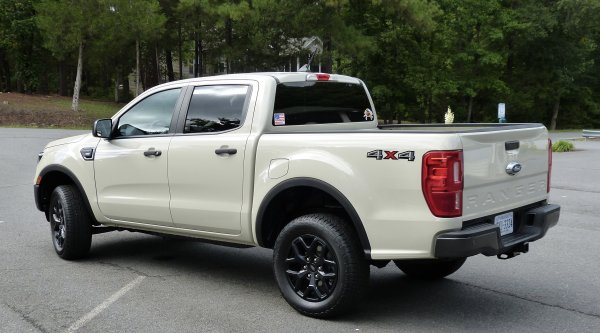
Ram Wants the Rampage in America, but the CEO Sees a Big Problem - Autoblog Ram CEO Would 'Love' A Ford Maverick Rival—But Don't Hold Your Breath While Kuniskis acknowledged that he would like to see the Rampage added to the U.S. lineup, he emphasized that interest alone does not guarantee it will happen. He pointed to internal market dynamics as a key factor, citing what he described as the “deprioritization” of the Ford Ranger due to the Maverick’s existence. “That shows you within that space there is a bit of cross-shopping between the two where the prices overlap,” he said.
-
One would have to imagine they'll benefit in multiple ways from this move.
-
Right, it would depend on how much you use it, and/or how long you keep your vehicle. $2500/$50 is 50 months, and if you finance at 60 months, you're spreading it to $41.67 per month over that period to essentially to have it forever. But, if you never plan on using it, I can understand not wanting to purchase it as a one time option. Out of curiosity, has it been difficult to activate/deactivate it for that yearly trip?
-
Hyundai had been good about replacing the engines (there is no fix for this - the engine has to be replaced). But from what I'm hearing, as the problem has become more widespread, the company has begun taking a harder line on covering a complete engine replacement.
-
 Correct, the main learning from Powershift dry clutch transmission problem is that it should have not been an option in the first place. The JV deal with Getrag was flawed from the out set. Ford engineers were given an impossible task, serious problems detected and not remedied in development must not be fixed on the fly in production. The ridiculous part was that by the time Ford Europe struck the deal with Getrag, Ford’s JV with GM had already delivered a much better automatic transmission with similar fuel efficiency thanks to mid gear lockup that Ford Europe hadn’t factored in. The 6F transmission became the solution to a problem that should’ve have never occurred. Introduced in 2015 ROW products, the fix transformed those vehicles but surprisingly, never came to North America
-
-
Topics
-
-
Top Downloads
-