



-
Files
-
Popular Contributors
-
1

-
2

-
3

-
4
-
5
-
6
-
7
-
8
-
9
-
10
-
-
Posts
-
With regards to F150 EREV, it’s clearly going to be a way for Ford to be ahead of the curve with being CAFE compliant until BEV is ready to go. The biggest problem with BEV is when used for heavy towing which often requires three times the energy when used for regular driving, be that in the form of triple the fuel used or triple the electric power used, that’s where the main issue shows with the Lightning’s heavily reduced range when towing. The big question for F150 EREV is how much ICE and how much battery. I have a feeling that if Ford wants this to be wildly popular, they’ll have to make it differnt enough from the hybrid and the basic ICEs to attract buyers.
-
 I can see that. This video is on topic, especially since I shared it at the 30 second mark to avoid his monologue.
 -

By twintornados · Posted
The Electric Viking is an Elon Musk fan-boi....thinks nothing Elon does is wrong....blah, blah, blah.... -
Generating 75KWh, with a moderately efficient ICE, would consume 7.7 Gallons of Gas. MATH Gallon of Gas = 33.56KWh 29% efficent ICE =1/.29 x 75KWh =258.62 KWh 258.62 KWh / 33.56Kwh = 7.7 Gallons of Gas
-
Weight isn't as much of an issue for Pickup Trucks. If you watch the Video, they don't have an issue with towing and charging. There are issues with the Chargers. Using the Engine to charge the battery is very inefficient, which may be why the real-world EREV mileage is so poor.
-
I don't get it.
-

By fordmantpw · Posted
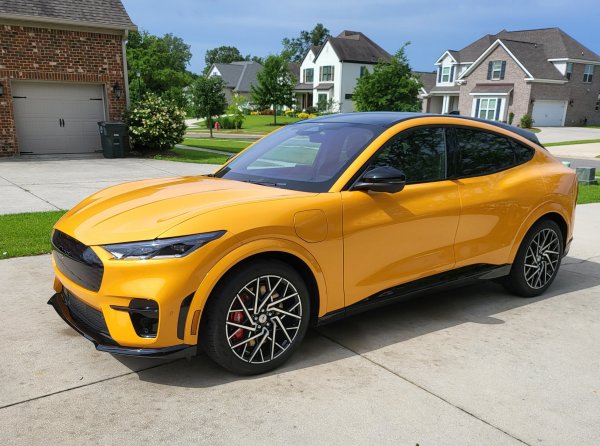
Just a little napkin math, a 200 HP engine (which is about what the Ford 3.3L makes at peak torque of 4000 RPM) makes about 149,000 Watts of power. So, assuming lossless charging, which I know is not the case, you could add about 75kWh to a battery in 30 minutes. Now, I know there are lots of things at play here and this is more of an ideal calculation, but if you cut everything in half, you add 75kWh to a battery in 60 minutes. In our Mach E, we can drive over 200 miles on 75kWh. -
Yes, the big question is at what rate will the ICE generator be able to recharge the batteries.
-
By twintornados · Posted
Oh, goodie...another Musk fan-boi video.... -
By fordmantpw · Posted
And charging time. If the battery is big, it takes a long time to charge it. That's fine for shorter trips or when you aren't towing, but when towing and eating up lots of electrons, it can be a pain.
-
-
Topics
-
-
Top Downloads
-



.thumb.png.b4cab58cf184294f67982a983a26206d.png)