-
Files
-
Popular Contributors
-
1

-
2

-
3
-
4

-
5

-
6
-
7

-
8

-
9
-
10

-
-
Posts
-
This is good and not really arguing with you on this point as you’ll read later in this post but to Ford, A PHEV battery that’s between 25 and 80 Kw hr makes the PHEV an EREV, well at least to Ford China but I digress….. on the subject at hand, I went back a page or so in this thread and found the confirmation by Ford that Lightning EREV will keep its electric drive motors. So that answers the question of battery size vs adding an ICE and generator being lower cost (more profitable) to Ford than pure big battery BEV. So now the question is what size ICE to add to the generator and how does it fit over around the front power axle? Does Ford turn the engine/generator transverse and incorporate it into the front axle to achieve the direct link at or above 50 mph?
-
-
By fordmantpw · Posted
Adding a bigger batter to the Powerboost hybrid is a PHEV. Adding an ICE to the Lightning is an EREV. Ford said the next Lightning will be EREV. -
Yea, that’s what I’m thinkin’ too. The old photos gave that journalist a perfect scenario to write an article comparing Jimbo to Musky Boy though
-
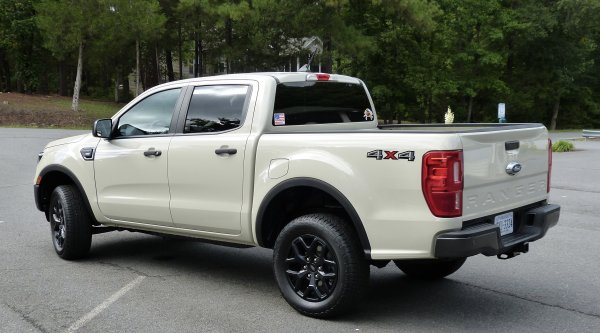
 I assume that bigger battery pack you are suggesting could be charged by plugging it in resulting in a drive train very similar to a Ranger PHEV? That seems to be the direction Volvo is going. That is, a conventional PHEV but with a higher capacity battery pack to give it an electric range of ~100 miles. The advantage of this approach for the F-150 is you don't suffer a highway efficiency penalty and the long distance towing penalty that will be the Achilles heel of EREVs. Another advantage is that you don't compromise the 4x4 off road capability that the Shark 6 suffers from. But, Ford keeps stating that the F-150 EREV will be a serial hybrid (wheels only driven by electric motors).
 -
HP has far more advertising oomph than torque and more low end torque usually lowers peak hp. There is probably an emissions advantage as well.
-

By DeluxeStang · Posted
They aren't wrong in that the photos are old, but the conclusion they draw from that of the project not working out behind the scenes is just idiotic. It's far more likely that things are progressing nicely, but they just aren't ready to reveal new press material at this moment in time. -
Clickbait. Why would Ford release new photos of a secret product?
-
By DeluxeStang · Posted
I definitely agree price is an important factor, especially with how much of a turn off it is with the s650. But I feel like there has to be a way where Ford could be smart about this. -
By DeluxeStang · Posted
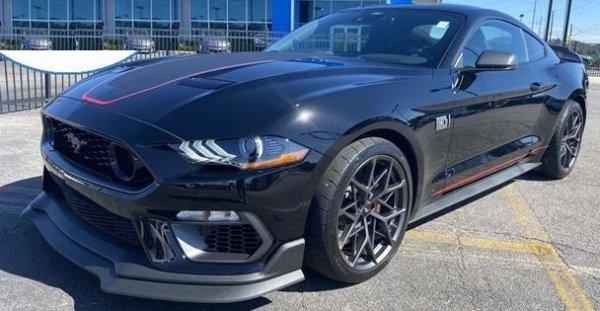
Would they be able to apply the cost learnings from CE1 to CD6 to make it more cost efficient? It just feels logical to move every unibody rwd vehicle to one platform within reason. I believe the biggest issue with the CD6 mustang was the size, and the weight. If they can make considerable improvements there, it would suit mustang well. It just feels like we can't go on like this. The s650's classis in certain forms dates all the way back to 2004. We need a modern, more dynamic and flexible platform that can handle things like hybrid and EV tech without being horribly compromised, or can accommodate a sedan. Idk if it'll take the form of CD6 or something else entirely, but a future RWD platform that underpinned the explorer, a gas powered mustang SUV, a sedan, and a coupe could be the key to giving the mustang the fresh platform it deserves without making the price insane. In theory, having it share it's platform with several other high volume models would be more cost efficient by far than it riding on an orphan platform.
-
-
Topics
-
-
Top Downloads
-