-
Files
-
Popular Contributors
-
1

-
2

-
3
-
4
-
5
-
6

-
7
-
8

-
9
-
10
-
-
Posts
-
By DeluxeStang · Posted
Fair enough, I kinda view prototype as a vague term that can refer to finalized protos, or mules. Kinda as an all encompassing term. -
 As the title states I got married last Saturday and me and my wife both wanted a classic car for our photo shoot. Flash back a few months ago when I did the Lincoln Kennedy Blvd Cruise and I met a great guy there who had a white on white 67 convertible and he really came through for us. We don't have all the photos yet just a 'preview' but the ones we got so far look great. The car got a lot of attention everyone loved it especially my wife. The photographer asked if the car could be moved back into the sun for some of the other shots and the owner told me to go for it so I got to back it up and drive it forward a little, my first time driving a 60s Continental which was fun too. The first black and white shot my wife likes so much we have talked about getting it blown up and printed on a large canvas and hanging up somewhere in the house.
 -
By DeluxeStang · Posted
But wouldn't they be using production bodywork this close to launch? -
I still think a Mustang based Lincoln could work by giving it powertrains that would NEVER go into a Mustang like the 3.0TT or the 3.5TT as a halo type vehicle, hell even pair them with an electric motor and bring back the Grand Touring trim. This would obviously sell in very low numbers but would give Flat Rock another vehicle and generate traffic for Lincoln. It should focus on smooth effortless power be an anti Mustang so to speak. Revive the Mark Series? Maybe maybe not could be it's own thing. It probably won't happen but it's a shame to me that we will never see either of those engines in a Mustang from the factory since that would be considered "sacrilegious" I think a Bronco based Lincoln could work too it would have to have a fixed roof and worked on sound deadening to give it a quiet ride. I also think they should try to do something with CD6 give the Aviator a coupe like counterpart. ANYTHING
-
By Motorpsychology · Posted
The door is ajar already: Buick Envision, and Lincoln Nautilus. Envision and Nautilus production are coming back here, but that's a few years out yet. The Polstar 2 was imported from China AFIK, but the successor Polstar 3 is made in South Carolina. -
If 1APs are out, all they will see is another Maverick….. very clever Ford.
-
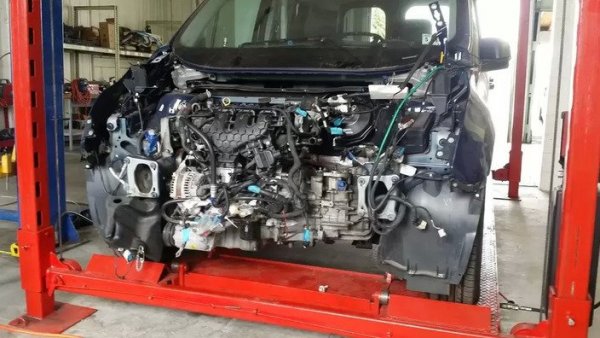
We are past the mule stage. Prototypes are wearing production body. The three stages of vehicle test builds: Mule These are engineering test builds that are often hacked up bits and pieces of other things clubber together to test specific components (e.g. suspension, cooling, drivetrain etc). Other times they don't appear to be "mules" at all because the component they are testing could be completely hidden under the sheet metal of existing cars (e.g. electrical systems or new transmission) - Mules in plain sight. Prototype These are design locked-in test builds with production-ready body panels and exterior. All the design engineering is done and they are validating to see how it all fits together, or for durability testing. They are often camouflaged to hide key exterior design features or elements. Sometimes there is even tacked on fake bits to throw people off. Pre-production These are test builds during training or test runs to validate the factory tooling and settings. Pre-production vehicles and usually used for experimenting with trim levels impact for build time, color mix-matches, and emission testing. e.g. they may build a batch with no sunroof and a batch with sunroof to see any run time variance. Or they try painting bumpers in different ways to see if color still match. The article suggests that Ford has already locked in the designs since they are using the term prototype.
-
As I see this, the key impacts of the FDIC ruling on Ford Credit include: Lower Funding Costs: By establishing an FDIC-insured industrial bank, Ford Credit Bank can accept deposits to fund its auto lending operations, providing a cheaper, more stable funding source than solely relying on external financing markets. Operational Shifts: The new entity will act as a Utah-chartered industrial bank focused on nationwide automotive financing, specifically by purchasing retail installment sales contracts from independent dealers. Capital Requirements: As a condition of the approval, Ford Credit Bank must maintain a minimum 15% Tier 1 leverage ratio, and the parent company must provide financial support to the new bank. Expansion of Services: Beyond auto loans, the industrial bank structure allows Ford to offer additional financial products, such as certificates of deposit (CDs). Strategic Alignment: This move supports Ford’s broader strategy, allowing for more flexible financing options for customers during a period where the company is pivoting towards hybrid and more affordable EV models. The bank is expected to be operational within 12 months of the approval.
-
 I’ve dealt with major ice storms, and they absolutely peg the Suck-O-Meter. Snow makes things look pretty and can make it hard to get around, but ice takes out power lines and threatens people’s lives. 0 of 10, would not recommend.
 -
Thanks for the video my friend. Voelker is a contributing editor to Car and Driver and wrote an article in the January/February 2026 issue of that rag recently with themes similar to what's in the video: EVs are not going away. At whatever rates of adoption, they will continue to grow as a percentage of every global market, including some of those outside the wealthiest cohort. As one engineer noted long ago, the automobile is one of the very few remaining high-volume consumer products we've not yet electrified. It will take generations, but it is happening.
-
-
Topics
-
-
Top Downloads
-